Modular Mobility
Parent-Child Vehicle System
One family, one car's cost, multiple scenarios covered. A system comprising a main vehicle ("parent car") and a detachable sub-vehicle ("child car") — constructing a reconfigurable mobile living platform through "combine / separate" modes.
01 · The Challenge — Four Dilemmas of Urban Mobility
High Cost: Vehicle purchase and running costs remain prohibitive.
Low Efficiency: Traffic congestion; single-person driving a large car wastes resources.
Space Scarcity: Parking spots are increasingly hard to find.
Scenario Lock-in: Fixed vehicle types cannot serve both solo commuting and full-family trips. We needed an elastic solution that improves mobility flexibility without increasing vehicle ownership.
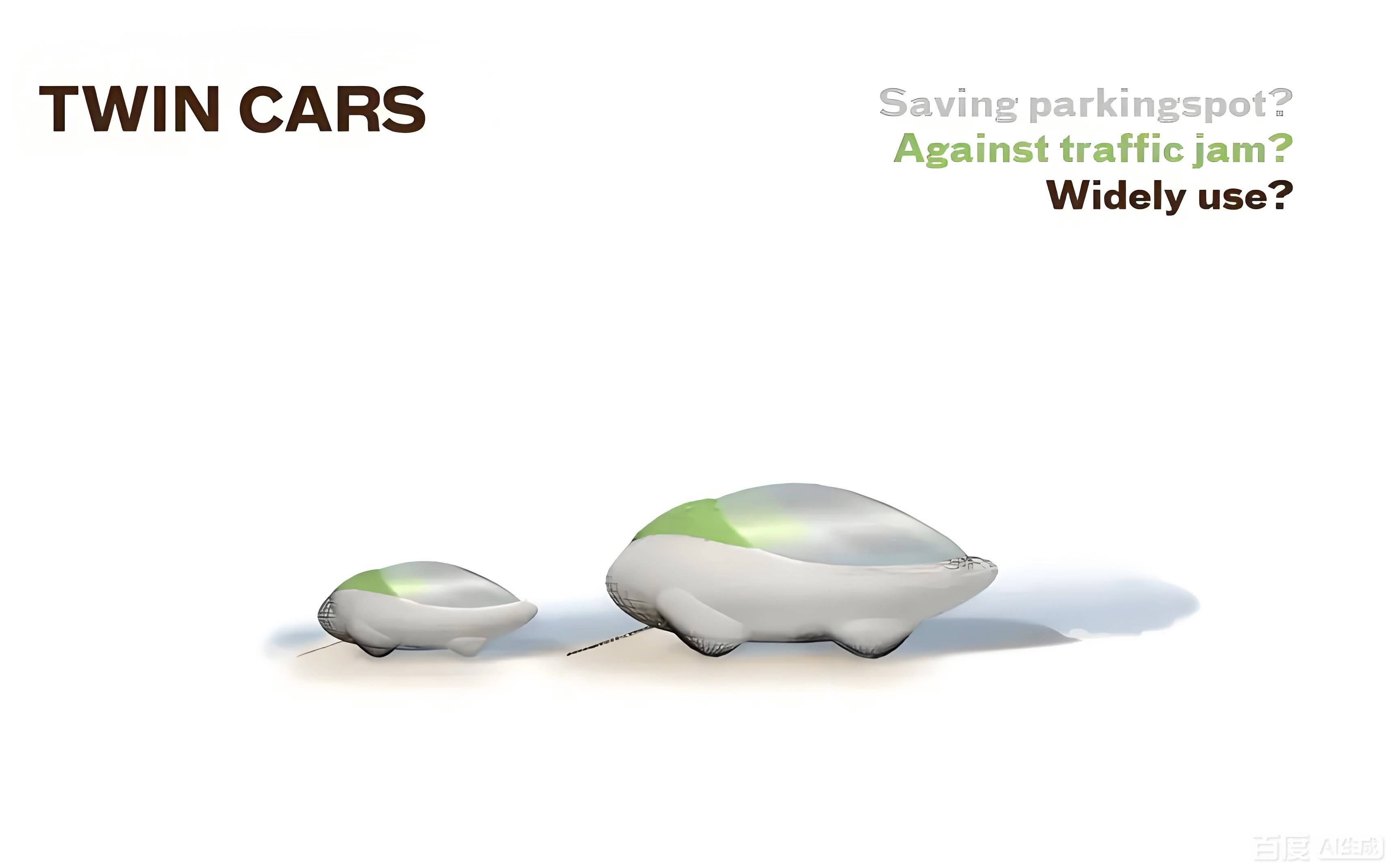
02 · The Solution — Human in Command, System Adapts
Separation and Fusion
The design philosophy centers on "separation and fusion." One parent vehicle and at least one detachable child vehicle. They can physically connect as a unified whole for long-distance travel, or separate for independent use in short urban commutes. Not just a vehicle — an elastic system.
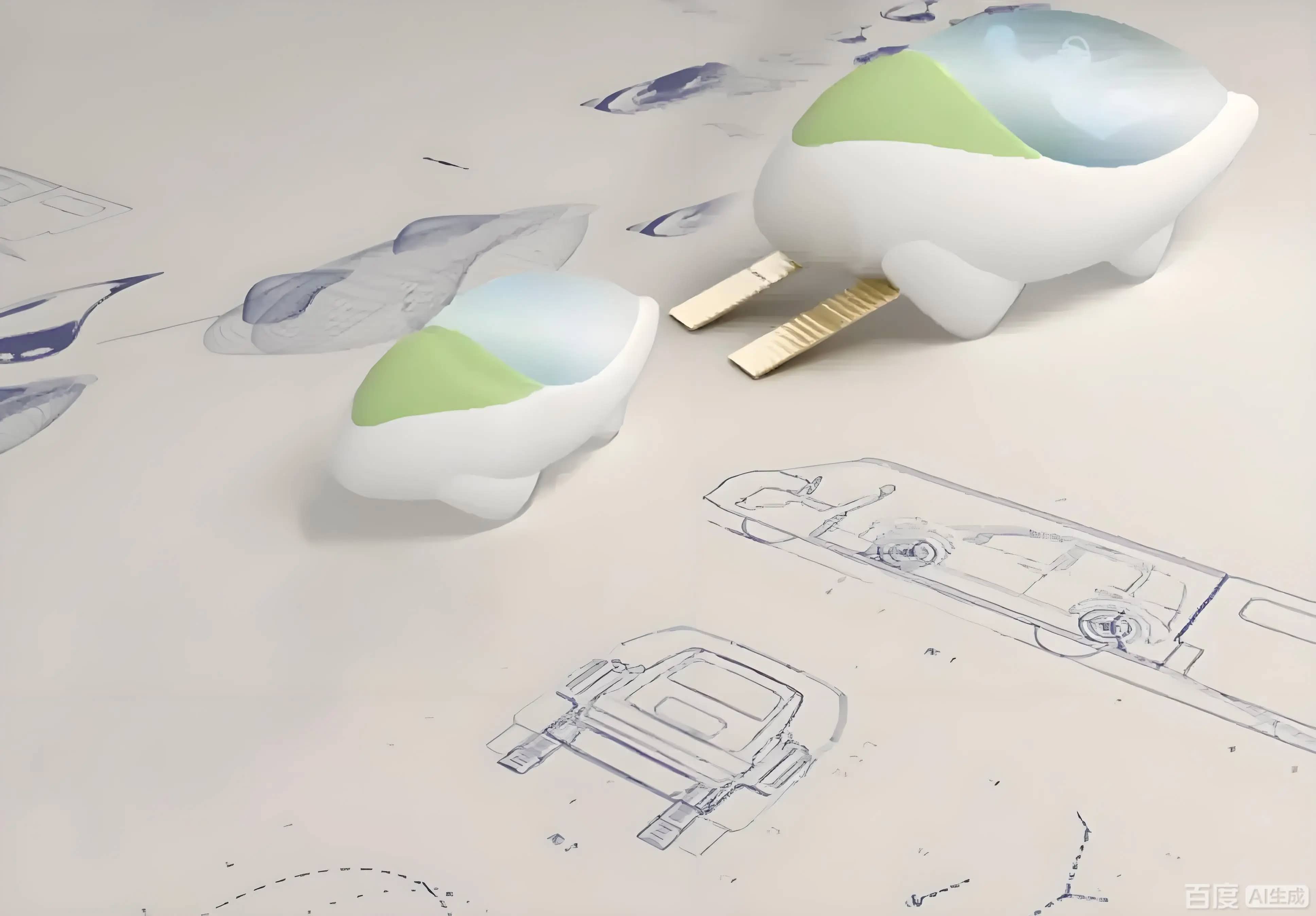
03 · System Blueprint — Mechanical Connection Mechanism
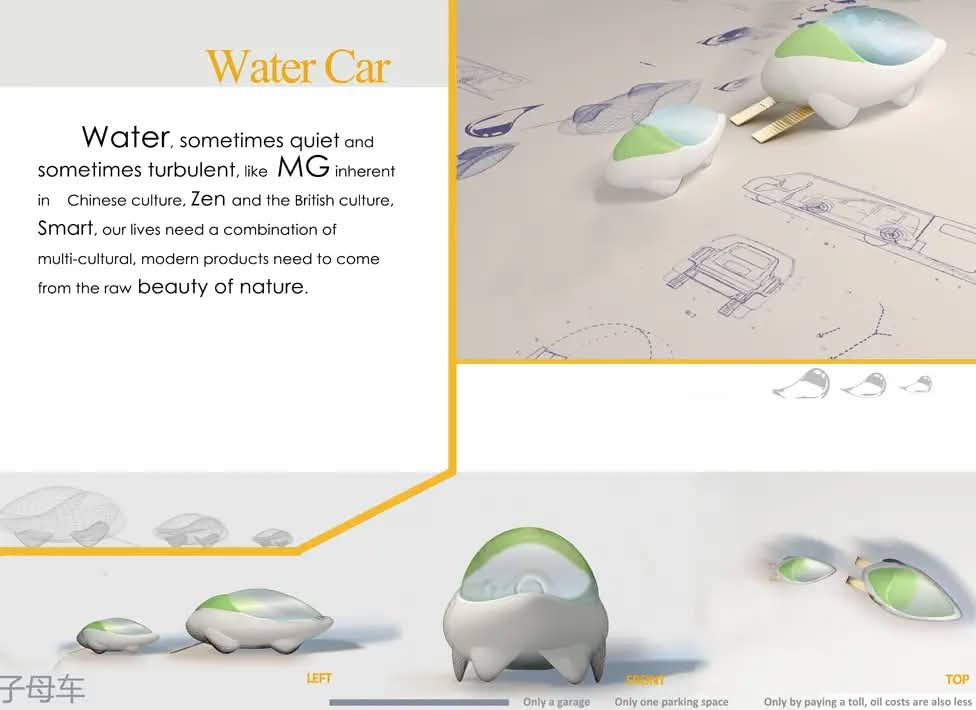
Combine & Separate
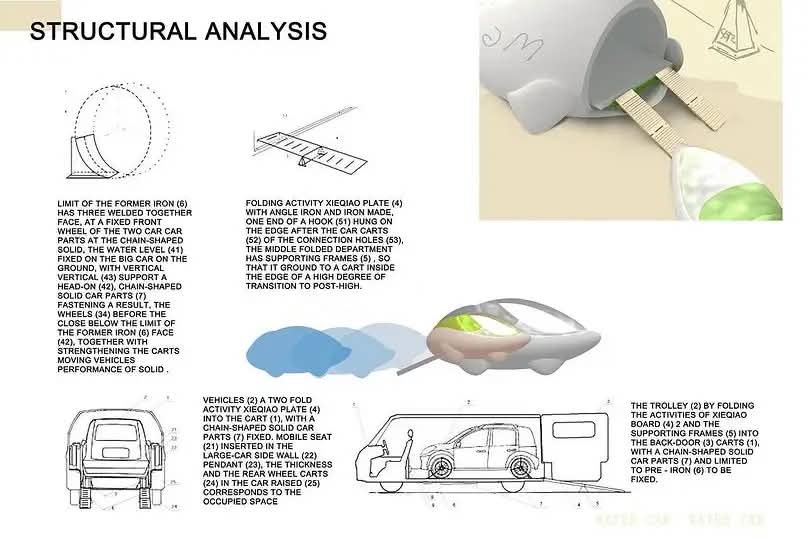
Parent and child vehicles each have independent powertrains — can operate independently or physically combine.
Chain-Link Mechanism
A specialized chain-link connector achieves rigid connection and power coordination between vehicles.
Automated Ramp
An automated articulated ramp ensures smooth, rapid boarding and alighting of the child vehicle from the parent.
04 · Scenario Applications
Commuting Mode
Solo driving the compact "child car" to weave through traffic — small footprint, solving the last-mile and parking problem.
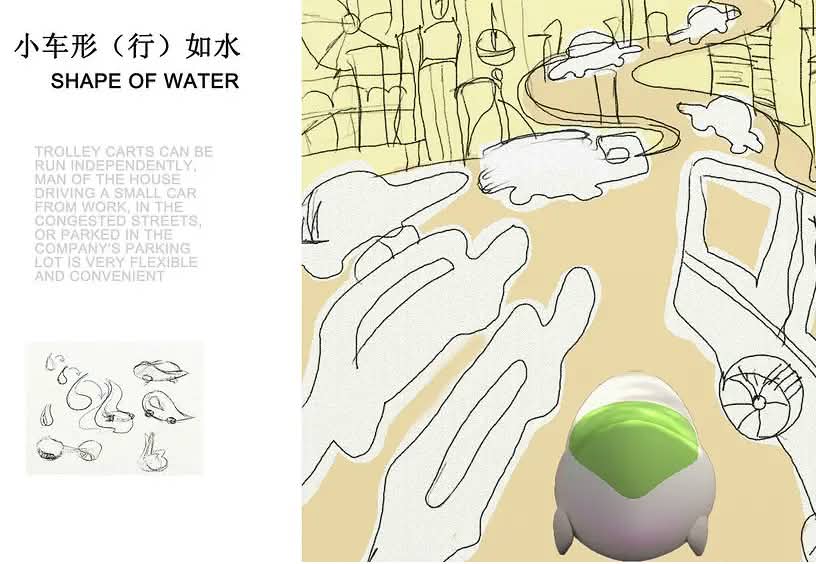
Combined Mode
Family trips: child car docks into parent car to form a whole. Pay one toll and one tank of fuel — effortless long-distance travel.
Smart Interior
Movable seats and wall anchor points in the parent car flexibly switch between passenger and cargo modes.
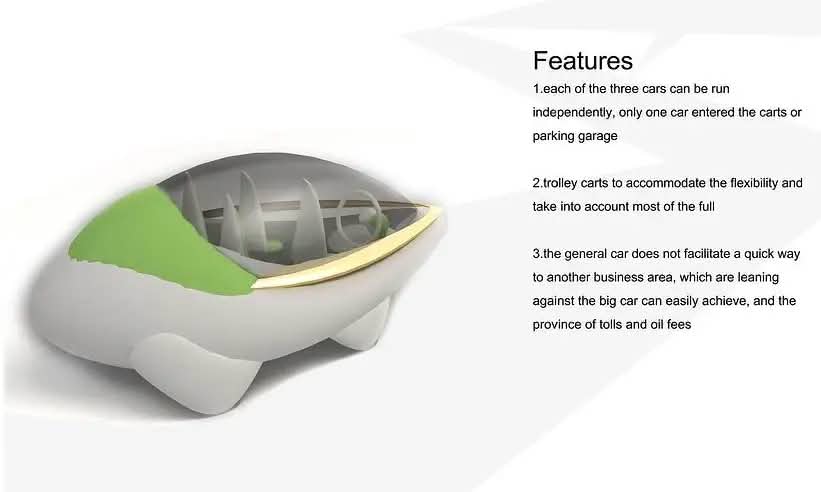
Compact Parking
Three vehicles (one large, two small) park in combination. One standard parking space fits all family vehicles.
05 · Impact
An early practice in elastic system design. Rather than designing a single vehicle, this designed a reconfigurable mobile living platform. It breaks the boundaries of traditional car ownership — solving multi-scenario, multi-member mobility with one car's cost, embodying the forward-looking design philosophy of "human in command, system adapts."
🏆 National Utility Model Patent